4 min read

The True Cost of Facility Downtime: How Small Maintenance Issues Become Big Business Problems

The True Cost of Facility Downtime: How Small Maintenance Issues Become Big Business Problems
9:06

Facility downtime is rarely just a maintenance problem. It’s an operational and financial problem. When equipment or an electrical system fails at a retail store, restaurant, or grocery location, the repair cost may be only one part of the total impact. The real expense builds around it: lost sales, diverted staff time, and eroded customer trust that never shows up on the maintenance invoice. That gap compounds fast across multi-site operations, and it's exactly where proactive maintenance earns its keep.

What Is Facility Downtime and Why Does It Matter?

Facility downtime is any period when a building, piece of equipment, or critical system cannot operate as intended, interrupting normal business activity. It covers everything from a failed electrical panel to a commercial appliance that stops holding temperature. Downtime doesn't need to last long to be expensive. A 20-minute outage at one site is an inconvenience. The same 20-minute outage, which repeats across a dozen locations several times a year, becomes a measurable drag on revenue and consistency.

For multi-site operators, downtime rarely stays contained to one system or one store. It touches staffing, customer experience, and brand reputation at the same time, which is why it deserves the same scrutiny as any other line item in the budget.

What Are the Most Common Causes of Facility Downtime?

Many facility downtime incidents begin with recurring or preventable conditions that were not addressed before they escalated. Understanding these patterns can help facilities teams reduce equipment downtime and respond earlier.

Deferred Maintenance

Small issues — a flickering light, a minor leak, an intermittent electrical fault — get logged and left alone. Left unaddressed, they escalate into full equipment failures or emergency facility repairs.

Aging or Unmonitored Equipment

Appliances and electrical systems nearing the end of their service life show warning signs long before they fail. Without regular inspection, those signs go unnoticed until the equipment stops working entirely.

Inconsistent Service Coverage

Relying on a patchwork of vendors across locations creates accountability gaps. No single provider owns the outcome, which makes recurring issues harder to catch before they become downtime.

Reactive-Only Maintenance Models

Reactive maintenance has a legitimate place in any facility strategy — some failures are unavoidable, and a fast response matters. The risk is relying on it exclusively and waiting for something to break instead of catching it early.

How Does Facility Downtime Impact Business Operations?

Facility downtime touches more than the repair line item. It affects revenue, labor, and customer experience at the same time, often in ways that don't show up until the numbers are added together at the end of a quarter.

5 Key Costs of Facility Downtime

  • Lost productivity: Staff time diverted to manual workarounds instead of serving customers or running the location.
  • Lost revenue: Closed registers, unusable equipment, and reduced transaction capacity during peak hours.
  • Customer experience impacts: Longer waits and inconsistent service that erode brand trust across locations.
  • Emergency repair costs: Expedited service and after-hours rates cost more than planned, scheduled work.
  • Equipment reliability decline: Repeated failures shorten equipment lifespan and drive up long-term capital costs.

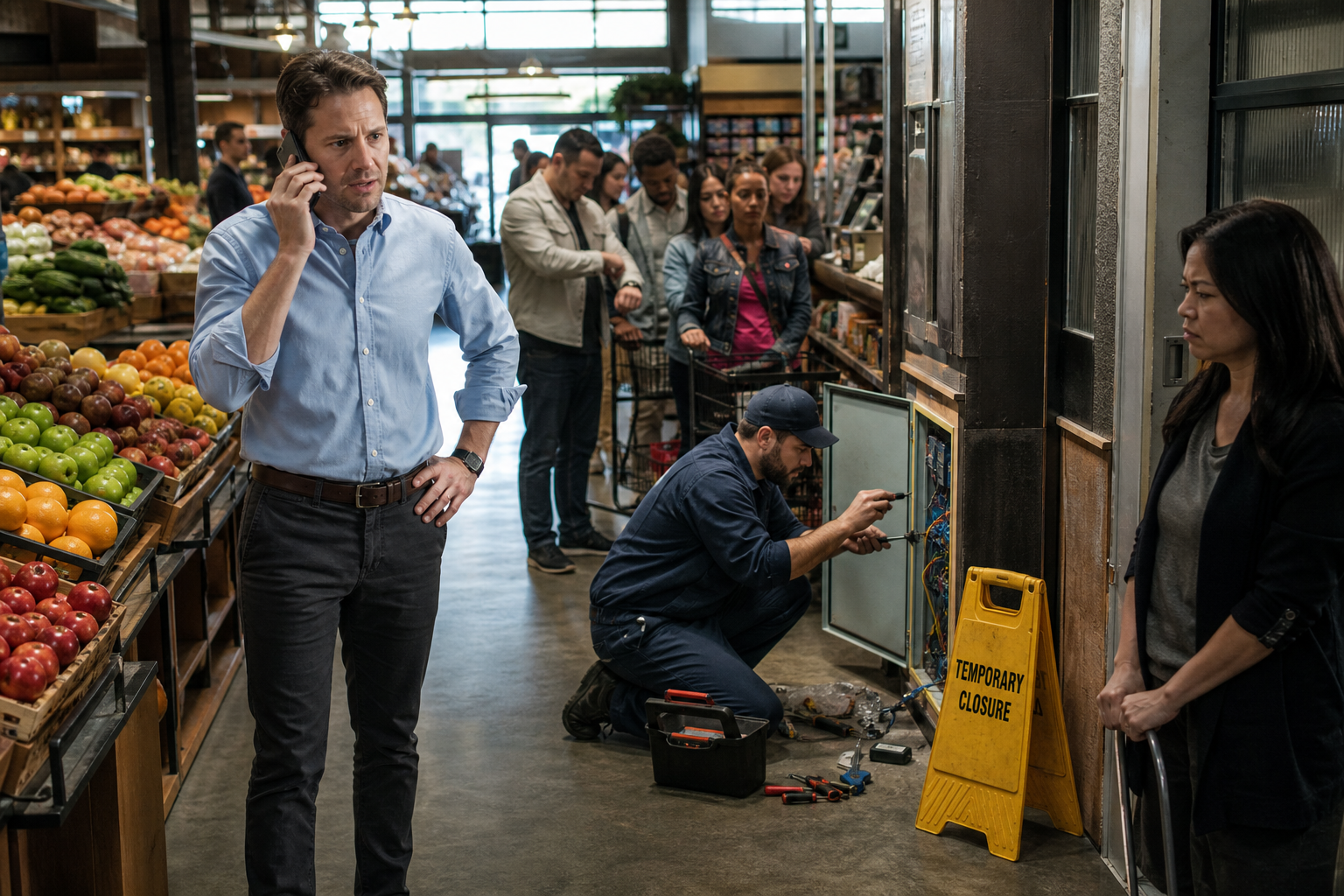
In retail operations, a single point-of-sale outage during a busy weekend can mean hundreds of missed transactions before a technician even arrives. In grocery and convenience settings, an electrical fault tied to refrigerated case lighting or controls can put product and compliance at risk within hours. Neither scenario is rare, and neither is cheap: a 2025 Queue-it analysis found that among large retail operators, downtime-related losses average $287 million a year — the highest of any industry it measured, driven largely by lost revenue and staffing disruption rather than the repair itself.

How Can Preventative Maintenance Reduce Facility Downtime?

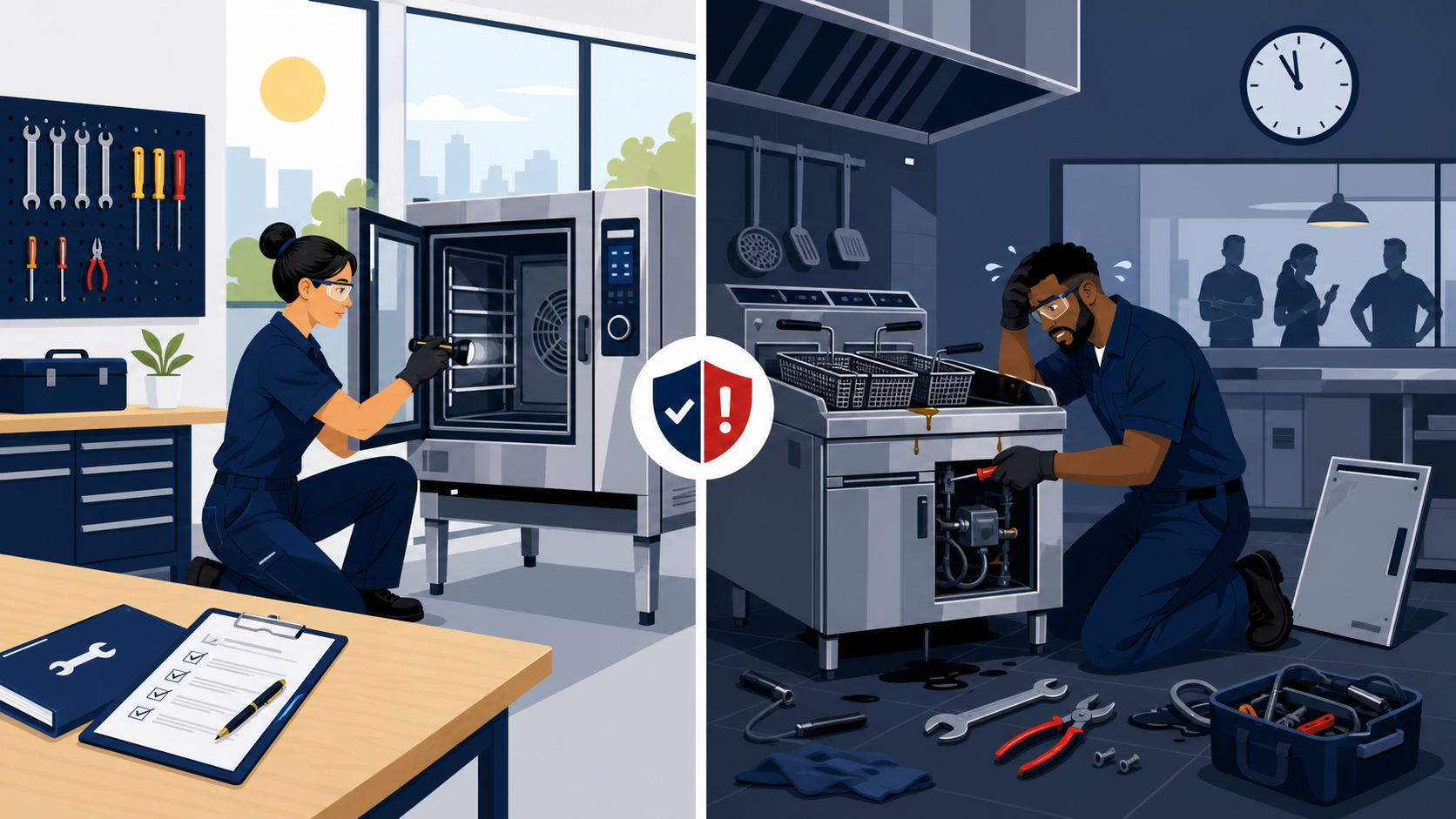
Preventative maintenance identifies and resolves issues before they interrupt operations, replacing costly surprises with scheduled, predictable service. For multi-site operators, it is the clearest path to reducing facility downtime without adding internal headcount or complexity. Preventative maintenance also reduces the risk of repeat visits. When recurring wear, loose connections, or deteriorating components are identified before a full failure, technicians have a better opportunity to address the underlying condition rather than responding only after operations have already been interrupted.

Checklist: How to Reduce Facility Downtime

  • Identify mission-critical equipment at each location
  • Schedule routine preventative maintenance visits
  • Address deferred maintenance promptly, before it escalates
  • Monitor recurring repair issues for patterns
  • Test electrical systems regularly
  • Inspect commercial appliances on a consistent schedule
  • Develop an emergency response plan for every site
  • Partner with a reliable commercial service provider

This is where the conversation naturally shifts from diagnosing the problem to building a plan that keeps it from happening again.

What Systems Should Facilities Managers Prioritize to Prevent Downtime?

Electrical infrastructure and commercial appliances are the systems most likely to cause disruption when neglected and the ones facilities managers should prioritize first. These are the systems that keep a location transacting, serving customers, and operating safely day to day.

Prioritizing them protects business continuity — the ability to keep operating despite equipment failures or unexpected disruptions — by focusing attention on what actually keeps the lights on and the doors open.

T&J Companies: A Partner Built for Multi-Site Reliability

Reducing facility downtime takes more than a schedule. It takes a partner who shows up prepared, fixes the problem the first time, and owns the outcome from diagnosis through resolution. That's the model behind commercial electrical service across nine Northeastern states and self-performing commercial appliance repair at T&J Companies.

Every service call is handled by T&J's own trained Service Technicians — never subcontractors — which means one accountable team and a first-time-fix approach for multi-site operations, rather than a rotating cast of vendors. For facilities managers, operations directors, and procurement teams managing locations across state lines, that consistency turns commercial facility maintenance from a reactive expense into a dependable part of the operation.

Schedule a maintenance service visit and put a self-performing team behind your facilities.

Frequently Asked Questions

What is facility downtime?

Facility downtime is any period when a building, piece of equipment, or critical system can't operate as intended. It includes electrical failures, appliance breakdowns, and other disruptions that interrupt normal business activity, even briefly, and can affect one location or many at once.

What causes unexpected facility downtime?

Common causes include deferred maintenance, aging or unmonitored equipment, inconsistent service coverage across multiple vendors, and an over-reliance on reactive-only maintenance. Most downtime stems from small, preventable issues that went unaddressed until they escalated into full failures.

How much can facility downtime cost a business?

Costs vary by industry and location, but downtime typically drives lost productivity, lost revenue from closed registers or unusable equipment, customer experience setbacks, higher emergency repair rates, and shortened equipment lifespan. These costs compound quickly across multi-site operations.

How does preventative maintenance reduce downtime?

Preventative maintenance identifies and resolves equipment or electrical issues on a scheduled basis, before they cause unplanned failures. This shifts spending from expensive emergency repairs to predictable, planned service and helps prevent repeat breakdowns that drain time and budget.

Which commercial systems are most critical to maintain?

Electrical infrastructure and commercial appliances are the systems most likely to disrupt operations if neglected. These systems directly affect a location's ability to transact, serve customers, and operate safely, which makes them the top priority for any facilities maintenance plan.

How can facilities managers improve equipment reliability?

Facilities managers can improve equipment reliability by scheduling routine inspections, addressing deferred maintenance promptly, monitoring recurring issues for patterns, and partnering with a single accountable service provider rather than a fragmented mix of vendors across locations.