6 min read

Why Multi-Location Retailers Struggle With Facility Service Vendors — And How the Right Partner Changes Everything

Why Multi-Location Retailers Struggle With Facility Service Vendors — And How the Right Partner Changes Everything
12:49

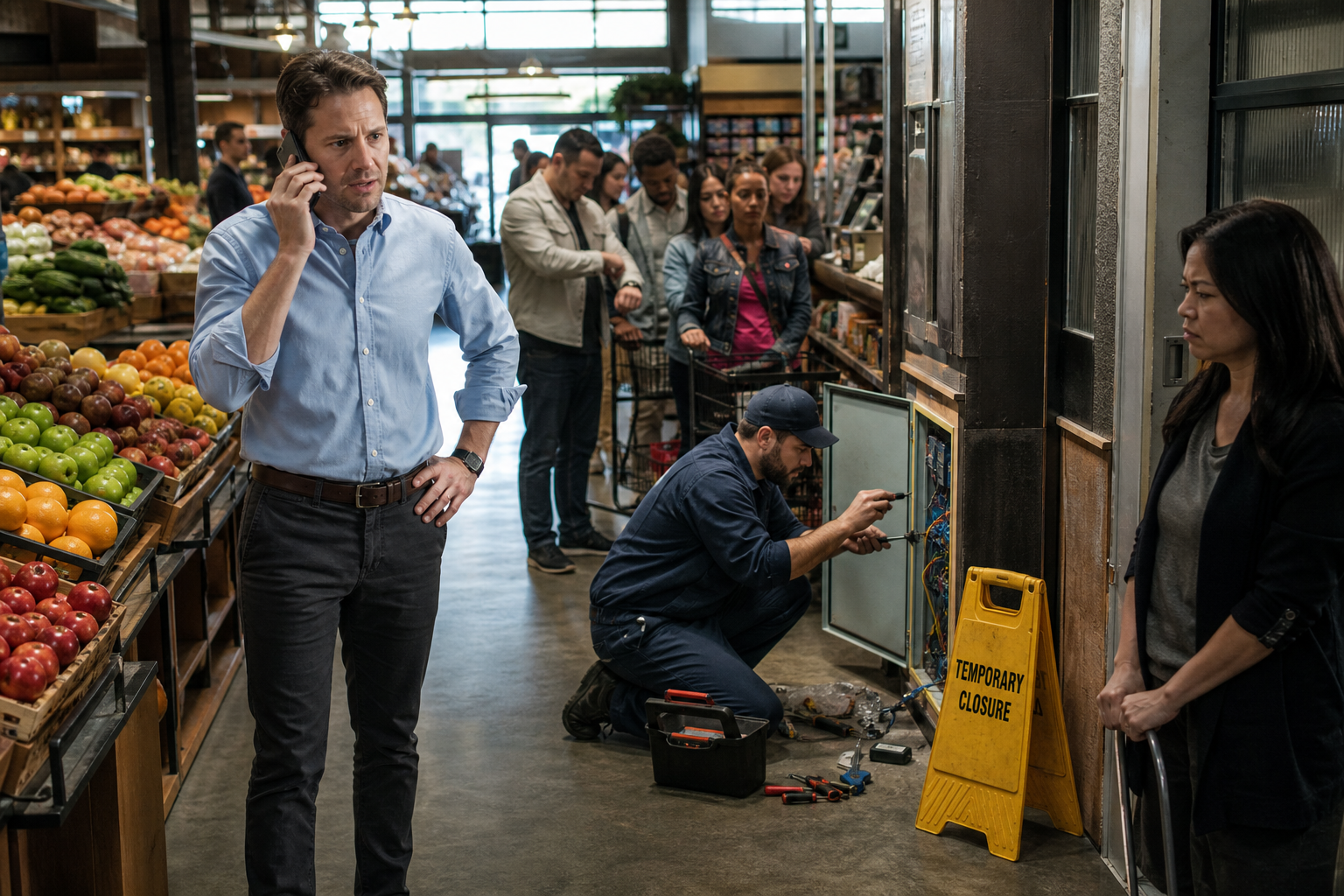
It's Tuesday morning. You have three calls waiting — one from a store manager in New Jersey whose lighting is out, one from a regional director in Connecticut asking why last week's repair still isn't closed out, and one from a QSR location in Massachusetts where the oven went down overnight. Three sites. Three different vendors. Nobody has an update.

If that scenario sounds familiar, you already know the problem. Managing retail facility maintenance across multiple locations isn't just logistically complex — it directly affects uptime, guest experience, and brand consistency. The wrong vendor setup turns a manageable operation into a permanent fire drill.

This article breaks down why multi-location businesses struggle with facility service vendors, what a reliable multi-location facility service provider actually looks like, and how to evaluate one before you're in the middle of a crisis.

What Challenges Do Multi-Location Retailers Face When Managing Facility Service Vendors?

Multi-location retailers commonly struggle with inconsistent service quality, unpredictable response times, and the coordination of multiple contractors across regions — each with different standards, invoicing processes, and communication habits. The result is a facilities team that spends more time managing vendors than managing facilities.

The operational reality behind that summary tends to look like this:

Subcontractor chains

Many facility vendors don't send their own people — they dispatch through a network of regional subcontractors. That adds layers between the initial call and the actual fix. By the time a technician arrives, two or three parties have diluted accountability. When something goes wrong, nobody owns it.

No standardized reporting

Without consistent documentation, a facilities manager overseeing 20 locations has no reliable way to know what actually happened at a site after a service call. Did they fix it or patch it? What parts were used? Is this the third time this equipment has failed? Without answers, you're managing in the dark.

A reactive-only culture

Most vendors show up when something breaks. That's the extent of the relationship. There's no scheduled check-in, no proactive assessment, no attempt to get ahead of the next failure. For multi-site operations, that reactive posture compounds over time — small problems that could have been caught early become emergency commercial repair service calls that disrupt operations and blow the budget.

Communication gaps

When a site manager calls a regional vendor and leaves a message, who follows up? How does that information reach the facilities director? Fragmented vendor relationships mean fragmented communication, and that creates the exact scenario from Tuesday morning.

Why Do Self-Performing Technicians Make a Difference in Commercial Facility Services?

Self-performing technicians are directly employed by the service company — not dispatched through a subcontractor network. That distinction matters because one team maintains accountability, training standards, and communication from the initial call to the closed work order.

When a vendor operates through subcontractors, the service company manages coordination. Someone else handles the work itself — someone with different training, different tools, and a different standard for what "done" looks like. That's where consistency breaks down.

A self-performing model removes those layers. One call reaches one accountable team. That team shows up, does the diagnosis, completes the repair, and documents the outcome. There's no handoff, no middle party, no version of "the subcontractor will be in touch."

This is the operating standard at T&J Companies. Every service call across nine Northeastern states — New York, New Jersey, Pennsylvania, Connecticut, Rhode Island, Massachusetts, Vermont, New Hampshire, and Maine — is handled by T&J's own trained Service Technicians. No subcontractors. No exceptions.

The first-time fix approach is built into that model. T&J Service Technicians arrive prepared to diagnose correctly and resolve the issue in a single visit whenever possible. That's not just good for efficiency — it's a direct response to one of the most common frustrations in multi-site operations: the repeat service call that wastes time, budget, and patience.

How Does Preventative Maintenance Reduce Long-Term Operational Costs?

Preventative maintenance reduces emergency repair costs, minimizes facility downtime, and extends equipment life. The return on a maintenance program typically outpaces the cost of the reactive alternative.

The math becomes clearer with real scenarios:

Retail and big-box stores

A failing electrical panel during peak hours doesn't just generate a repair bill — it costs revenue, staff overtime, and customer trust that's hard to rebuild. Routine inspections through a commercial electrical services program catch those warning signs before they become closures. One scheduled visit can prevent a situation that shuts down a location for a day or even more.

Restaurants and QSRs

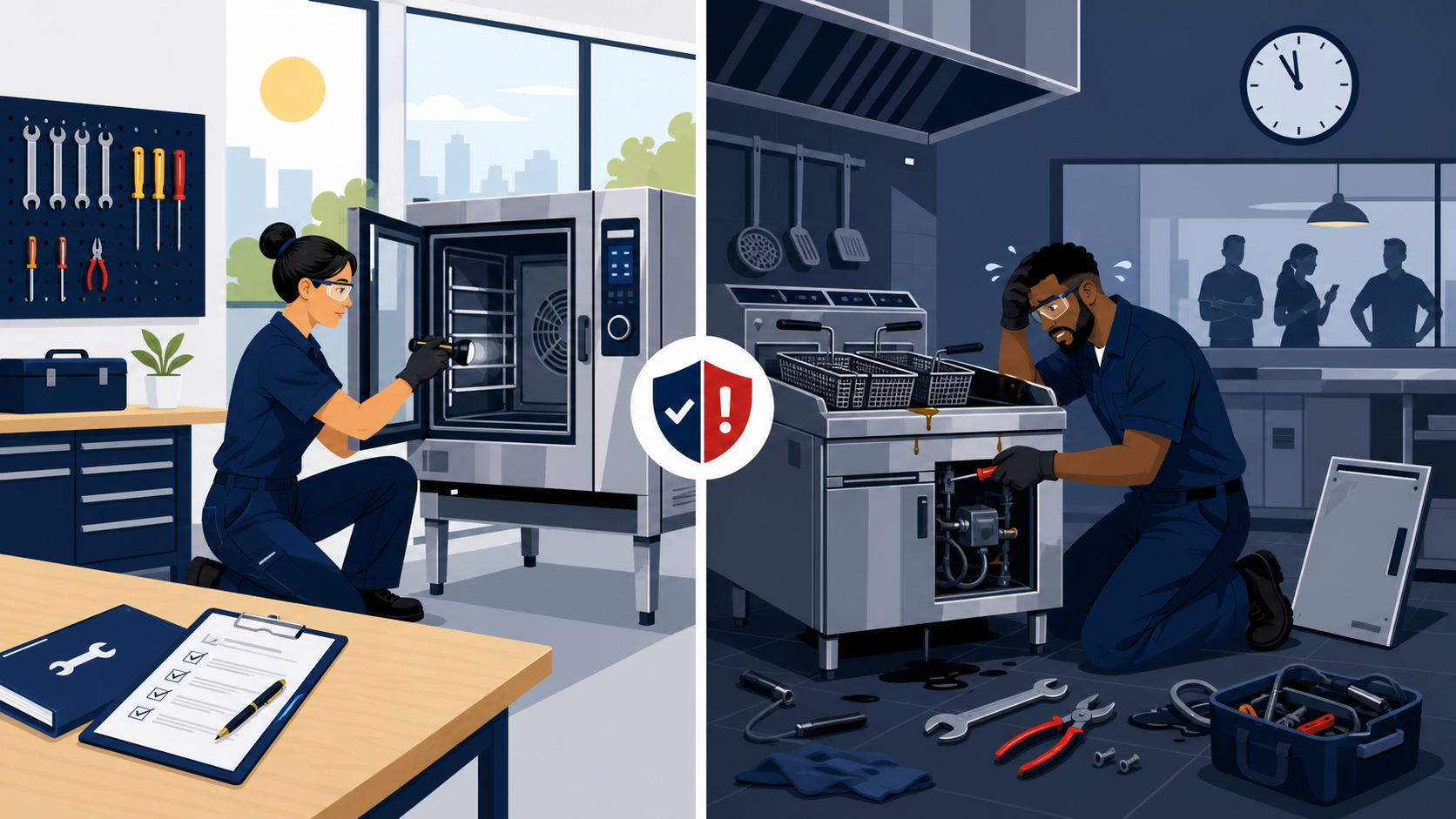
A commercial oven that hasn't been serviced in months will eventually fail during the dinner rush. That's not bad luck — it's a predictable outcome of deferred maintenance. Scheduled commercial appliance repair and inspection visits catch worn components, calibration issues, and early-stage failures before they pull a location offline at the worst possible moment.

Fuel and convenience locations

Equipment downtime at a convenience location immediately affects throughput. When a pump, refrigeration unit, or register system goes down, customers don't wait. They go to the next competitor on the same block. A preventative maintenance program reduces those incidents and protects the revenue consistency that these high-volume, low-margin locations depend on.

Preventative maintenance services aren't a line item to defer — they're the operational backstop that keeps multi-site brands running predictably.

What Should Facilities Managers Look for in a Commercial Service Partner?

The right facility service partner for a multi-location operation delivers standardized service quality, consistent communication, and scalable coverage as the portfolio grows. The evaluation framework matters, especially when the current vendor setup is already causing problems.

The comparison below captures what that decision typically looks like in practice:

Factor

Multiple Vendors

Self-Performing Partner

Communication

Fragmented across contacts

One accountable team

Service Quality

Varies by vendor and region

Standardized across locations, with technician familiarity built over time

Reporting

Inconsistent or manual

Clear documentation and photo reporting

Response Time

Dependent on vendor availability

Faster coordination, prepared technicians

Scalability

Difficult as locations grow

Designed for multi-site expansion

Billing

Multiple invoices, multiple contacts

Simplified and centralized

The right partner doesn't just score well on that table. They demonstrate it consistently across every location, not just the flagship.

T&J Companies is built to meet that standard. Multi-state coverage across nine Northeastern states. Self-performing Service Technicians on every call. Photo documentation and real-time reporting after every visit, so facilities managers never have to call a site to find out what happened. That's not a pitch. That's the operating model, and it should be the baseline for evaluating any facilities management solutions provider.

How Does T&J Companies Support Multi-State Commercial Operations?

T&J Companies is a 100% self-performing, multi-location facility service provider serving commercial clients across nine states — NY, NJ, PA, CT, RI, MA, VT, NH, and ME. Operating since 1977, T&J supports retail chains, restaurants, fuel and convenience locations, and healthcare facilities through two core service divisions.

Commercial Electrical Services

Commercial electrical services cover installation, maintenance, and emergency repair across multi-site portfolios. From sign lighting and panel work to EV charger installation and retail store electrical maintenance, T&J's Service Technicians handle the full scope of work as a licensed multi-state electrical contractor, maintaining consistent standards at every location.

Commercial Appliance Service

Commercial appliance repair covers diagnosis, repair, and preventative maintenance for commercial kitchen and facility equipment. That includes emergency response when equipment goes down and scheduled maintenance programs designed to prevent it from getting there.

Every location in a client's portfolio receives the same preparation, documentation, and accountability. That's what operational consistency looks like at scale, and it's what T&J has been delivering for nearly five decades.

The Right Partner Shows Up Every Time

The difference between a vendor and a partner is accountability. Vendors fill work orders. Partners protect uptime, brand consistency, and operational continuity — across every location, not just the ones that make the most noise.

The right facility service partner reduces emergency calls, improves consistency, and gives facilities teams real information after every visit. That's what multi-location operations need and what the subcontractor-heavy, reactive-only vendor model consistently fails to deliver.

Contact T&J Companies to learn how a self-performing facility service partner can reduce downtime and improve consistency across your locations.

Frequently Asked Questions

What is a multi-location facility service provider?

A multi-location facility service provider is a company that delivers coordinated maintenance and repair services across multiple commercial locations, often spanning different cities, states, or regions. The best providers offer standardized quality, centralized reporting, and a single point of accountability across the entire portfolio, rather than a fragmented mix of regional vendors.

What are self-performing technicians?

Self-performing technicians are service professionals directly employed by the facility service company, not sourced through a subcontractor network. Because they're part of the same team, training standards, communication practices, and accountability remain consistent from the first call to the completed work order. This model reduces handoffs and improves service quality across locations.

Why do retailers need preventative maintenance?

Preventative maintenance services help retailers avoid unplanned equipment failures that interrupt operations, incur emergency repair costs, and affect the customer experience. Scheduled inspections catch problems early — before a failing appliance, electrical issue, or mechanical fault pulls a location offline. For multi-site brands, consistent preventative programs also reduce the management burden of reactive emergencies.

How can multi-location businesses reduce facility downtime?

Facility downtime — periods when equipment failure or maintenance issues interrupt normal operations — is most effectively reduced through two practices: a preventative maintenance program that addresses issues before they become failures and a service partner whose technicians arrive prepared to resolve problems on the first visit. Reactive-only vendor relationships tend to extend downtime rather than reduce it.

What industries benefit most from a self-performing facility service partner?

Retail chains, restaurants and QSRs, fuel and convenience locations, and healthcare facilities tend to benefit most. These industries share a common profile: multiple locations, high sensitivity to equipment downtime, and direct revenue impact when a site goes offline. A self-performing partner with consistent standards across all locations is a better fit than managing separate vendors for each region.

Why does multi-state service coverage matter for growing brands?

As a brand expands into new states, adding a new vendor relationship for each region creates fragmentation — different contacts, different standards, and different reporting formats. A multi-state electrical contractor or full-service facility partner with established coverage means the same accountability and service quality follows the brand into each new market without having to rebuild vendor relationships from scratch.