6 min read

Commercial Preventative Maintenance: How Multi-Location Retailers Reduce Downtime and Repair Costs

Commercial Preventative Maintenance: How Multi-Location Retailers Reduce Downtime and Repair Costs
12:23

The call comes in mid-afternoon. A deep-fryer at one of your busiest locations stopped running. Revenue is at risk. A technician needs to be found — fast. Whoever shows up first charges emergency rates, and there's no guarantee they'll have the part.

Sound familiar? That cycle — equipment fails, you react, you pay a premium — is reactive maintenance. It's a normal part of facilities operations. When reactive maintenance becomes the default across multiple locations, the costs quietly compound until they appear as a budget line that no one can fully explain.

Commercial preventative maintenance helps multi-location businesses reduce emergency repair costs, prevent facility downtime, and extend the life of critical equipment. For retailers, convenience stores, and food-service operators, scheduled inspections are often more cost-effective than relying on reactive repairs after equipment fails.

This article breaks down the financial and operational case for commercial preventative maintenance: what it is, what reactive maintenance actually costs, and how a proactive approach keeps your facilities running and your repair bills predictable.

What Is Commercial Preventative Maintenance?

Commercial preventative maintenance is a proactive service strategy in which equipment and building systems are inspected, serviced, and repaired on a scheduled basis before failures occur. The goal is to catch problems early, not after they've taken a location offline.

Contrast that with reactive maintenance, where repairs happen after something breaks down. Reactive maintenance is a necessary part of any facilities program, but as the primary approach, it tends to cost more over time.

A standard commercial preventative maintenance program covers the systems your locations depend on most: electrical panels and wiring, commercial appliances and kitchen equipment, lighting (interior, exterior, and emergency), HVAC, and plumbing. The exact scope varies by facility type, but the principle is the same across all of them — scheduled service beats emergency service every time.

Why Does Over-Reliance on Reactive Maintenance Cost Businesses More Over Time?

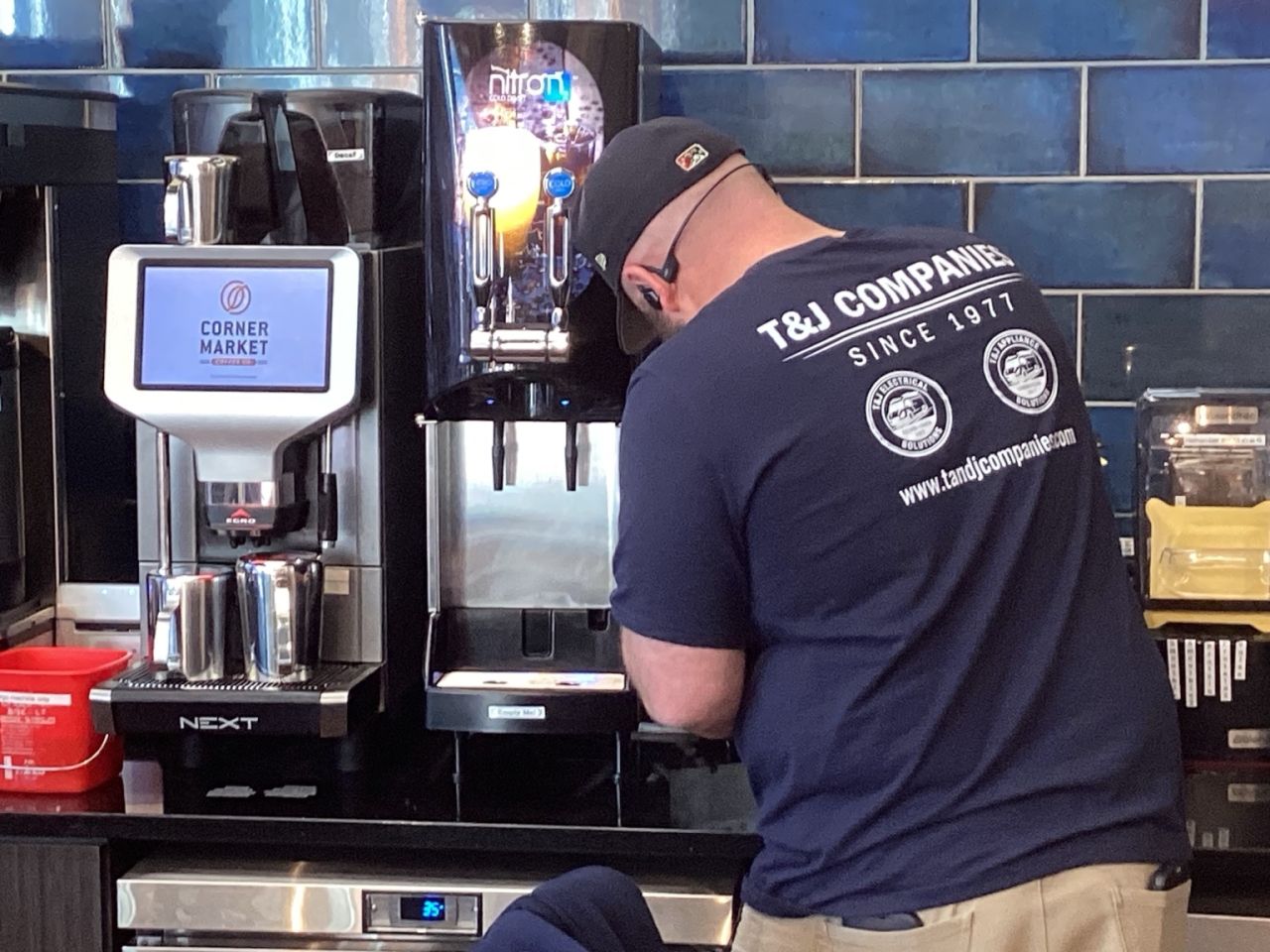
Reactive maintenance has its place. When something breaks unexpectedly, you need it fixed fast. But when unplanned repairs become the norm rather than the exception, the costs add up quickly. Emergency dispatch fees, premium after-hours labor rates, lost revenue during facility downtime, customer experience and brand reputation impact, and the staff time spent locating and coordinating vendors all accumulate, and none of it appears neatly on a single line item. Consider this: if a coffee brewer is down multiple times per week, your customers will go elsewhere.

The bigger problem for multi-location operators is inconsistency. Every reactive call introduces a different vendor and a different level of work variability, which is expensive to manage and nearly impossible to budget for.

5 Signs Your Business Is Relying Too Heavily on Reactive Maintenance

  • Frequent emergency repair calls across locations: If your team is regularly calling for urgent service, you're paying emergency rates on problems that scheduled maintenance could have prevented.
  • The same equipment failing more than once in a year: Repeat failures signal a root cause that was never properly addressed. Patching the symptom doesn't fix the problem.
  • Rising repair invoices without a corresponding increase in asset age: When costs climb, but equipment isn't getting older, deferred maintenance is usually the culprit.
  • Inconsistent vendor response times causing location-to-location variability: Different vendors mean different standards. Some locations get fast service; others wait. Neither outcome is predictable.
  • Operational disruptions that affect customers or staff: Equipment failures during business hours aren't just repair costs. They affect the experience your customers have at every impacted location.

How Does Preventative Maintenance Reduce Operational Downtime?

Preventative maintenance reduces facility downtime by addressing wear and potential failure points before they cause outages. Scheduled inspections catch what daily operations miss — a compressor running hot, a breaker showing resistance, a seal starting to fail — and resolve those issues during planned service windows rather than unplanned emergencies.

There's a compounding benefit, too. When the same technician services the same equipment over time, they build an asset history. They know what's been replaced, what's showing wear, and what to watch on the next visit. That documented history turns maintenance from a series of one-off repairs into an actual plan.

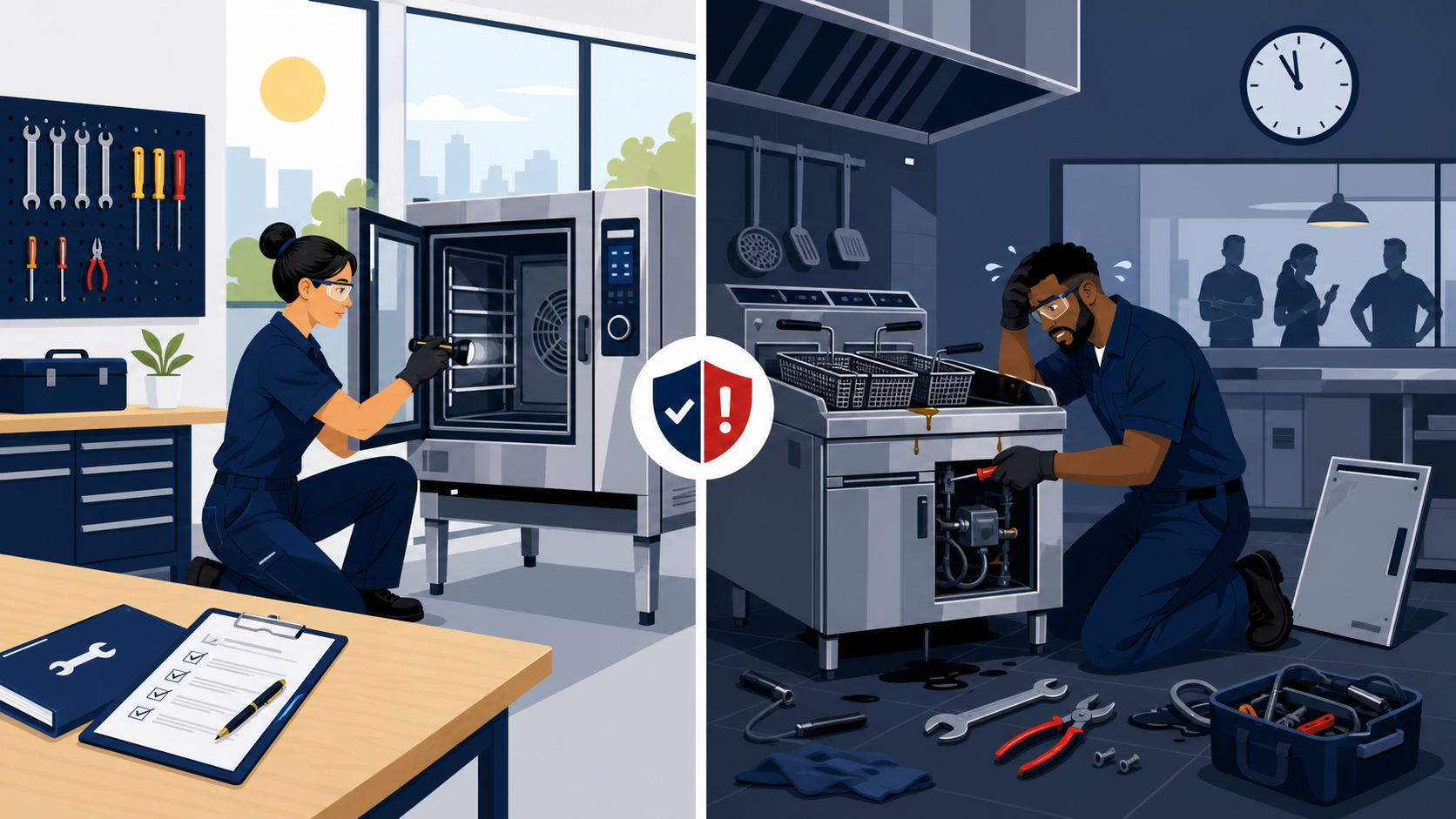
The table below shows how the two approaches compare in practice:


Reactive Maintenance

Preventative Maintenance

Timing

After failure occurs

Scheduled before failure

Cost profile

Unpredictable, often high

Predictable, budgetable

Downtime

Unplanned, disruptive

Minimal, controlled

Vendor coordination

Whoever is available at the time

Scheduled with your preferred, trusted partner

Asset lifespan

Can shorten with deferred care

Extended through regular service


The reactive vs. preventative maintenance comparison comes down to control. One model puts you at the mercy of when something breaks and who's available to fix it. The other keeps you in the driver's seat.

What Systems Should Multi-Location Businesses Prioritize?

Multi-location businesses should prioritize the systems most likely to cause operational disruptions or safety issues when they fail, and the order depends on what your locations do.

A practical commercial preventative maintenance checklist covers:

  • Electrical Systems: Panel inspections, breaker testing, and wiring integrity checks. Commercial electrical maintenance and preventative maintenance are non-negotiable: electrical failures are among the most disruptive and dangerous. A tripped breaker at the wrong time can affect refrigeration, lighting, and point-of-sale systems simultaneously. T&J's commercial electrical services address this proactively, not after the damage is done.
  • Commercial Appliances: Calibration, seal inspections, and compressor health. For food-service environments, commercial equipment maintenance is directly tied to food safety and health code compliance. In convenience store maintenance, appliances are the business — a failed dispenser or fryer isn't an inconvenience, it's lost revenue. T&J's commercial appliance repair team handles this as part of scheduled service programs.
  • Lighting Systems: Interior, exterior, and emergency lighting. Emergency lighting compliance is frequently overlooked until a fire marshal inspection or an incident puts it front and center.

Preventative maintenance for retail stores doesn't require treating all three equally. Restaurants and convenience store maintenance programs typically weigh appliances and electrical systems most heavily. Retail environments may prioritize lighting and electrical systems. Know your highest-risk systems and schedule around them.

Why Do Multi-Location Businesses Benefit From One Maintenance Partner?

One maintenance partner delivers consistent standards, documentation, and accountability across every location. Managing five vendors across nine locations isn't a maintenance strategy. It's a coordination job your facilities team didn't sign up for.

Every additional vendor in your network has a different response time, a different invoice format, a different definition of "fixed." When something goes wrong at a location, you're not just solving the repair problem. You're managing a communication chain.

Self-performing technicians — Service Technicians employed directly by a provider, not subcontractors — change that equation. One team means one standard of workmanship, consistent documentation on every visit, and a first-time fix mindset that respects your locations’ operating hours.

For multi-site facility maintenance across the Northeast, the math is straightforward: the fewer vendors you're managing, the more bandwidth your operations team has for everything else. T&J's multi-location maintenance provider model delivers exactly that. One team, consistent standards, and clear accountability at every site.

How to Build a Commercial Preventative Maintenance Program That Reduces Downtime

Reactive maintenance will always be part of the job. When equipment breaks, you need someone who shows up and fixes it right. Adding a preventative layer means fewer of those calls happen in the first place, and the ones that do are less disruptive.

A commercial preventative maintenance program helps you make that happen. Fewer emergency calls. More predictable budgets. Equipment that lasts longer because it's actually being maintained.

T&J Companies self-performs every service call across nine Northeastern states. No subcontractors. No handoffs. The same trained Service Technicians handle your locations on a schedule that works for your operations, and we take responsibility for the outcome.

If your current maintenance program feels more like firefighting than planning, it's worth a conversation.

Contact T&J Companies to evaluate your current preventative maintenance strategy.

Frequently Asked Questions

What is preventative maintenance for commercial facilities?

Commercial preventative maintenance is a scheduled service that inspects and resolves equipment issues before they cause failures. Rather than waiting for something to break, technicians service systems at regular intervals, checking electrical panels, appliances, lighting, and other critical equipment to catch wear early and extend asset life.

Why is preventative maintenance important for retail businesses?

Preventative maintenance for retail stores protects revenue, customer experience, and brand consistency. Equipment failures during business hours affect staff productivity and customer satisfaction. A proactive maintenance program reduces the frequency and severity of failures, keeps repair costs predictable, and prevents operational disruption from unplanned downtime.

How does preventative maintenance reduce downtime?

Scheduled inspections identify wear before it becomes failure — a compressor running warm, a breaker showing resistance, a seal starting to go. Addressing those findings during a planned visit costs far less than responding to an outage. It also means downtime, when it happens at all, is controlled rather than sudden.

What systems should be included in a commercial preventative maintenance plan?

At minimum: electrical systems, commercial appliances, and lighting. Electrical systems cover panels, breakers, and wiring. Commercial appliance maintenance covers calibration, seals, and refrigerant. Lighting includes interior, exterior, and emergency compliance, which is easy to overlook until an inspection flags it. Which of the three gets top priority depends on your business — food-service and convenience operators typically lead with appliances and electrical.

What are self-performing technicians, and why do they matter?

Self-performing technicians are Service Technicians employed directly by a maintenance provider, not subcontractors. The distinction matters because subcontracted work introduces variability in skill level, response time, and accountability. When a provider self-performs, the same trained technicians handle every service call, which means consistent workmanship, documented findings, and someone who actually owns the outcome.

Why do multi-location businesses need a scalable maintenance partner?

Multi-site facility maintenance across many locations becomes unmanageable when every site uses different vendors. Response times vary, documentation is inconsistent, and your team spends time coordinating instead of operating. A multi-location maintenance provider with regional coverage and consistent technician standards reduces that coordination burden and delivers the same service quality at every location, every time.

5 Signs Your Commercial Electrical Vendor Is Costing You More Than You Think

5 Signs Your Commercial Electrical Vendor Is Costing You More Than You Think

When electrical costs creep up across your locations, the instinct is to blame aging equipment or rising labor rates. More often, the real culprit is...

Read More
Why Multi-Location Retailers Struggle With Facility Service Vendors — And How the Right Partner Changes Everything

Why Multi-Location Retailers Struggle With Facility Service Vendors — And How the Right Partner Changes Everything

It's Tuesday morning. You have three calls waiting — one from a store manager in New Jersey whose lighting is out, one from a regional director in...

Read More