

4 min read
Preventative Maintenance vs. Emergency Repairs: Which Actually Costs Less?
Lucas Sestito : September 23, 2026
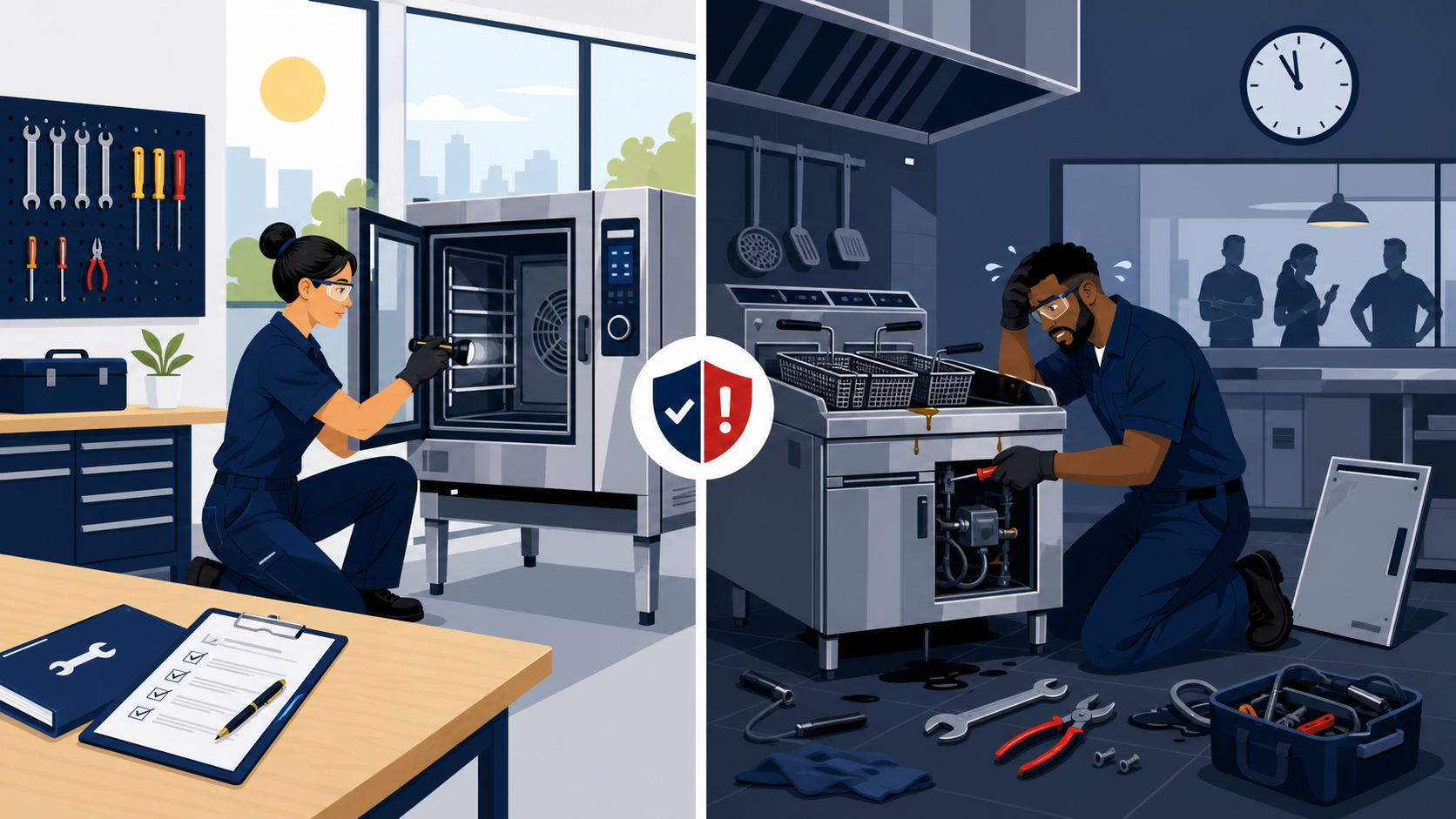
Does Preventative Maintenance Cost Less Than Emergency Repairs?
Preventative maintenance generally costs less over time than relying on emergency repairs. Planned maintenance helps reduce unexpected downtime, emergency service premiums, repeat failures, and premature equipment replacement.
What Are Preventative Maintenance Services?
Preventative maintenance services are scheduled, proactive inspections and servicing of equipment and systems performed before failures occur. Instead of waiting for a breakdown, a technician checks, tests, and adjusts equipment on a set schedule to catch small issues early.
This is different from reactive maintenance, which addresses problems only after equipment has already broken down, and from emergency repair, which is unplanned service required to restore equipment after an unexpected failure. All three are maintenance approaches. The difference is timing, and timing is where the cost gap opens up.
What Does Emergency Repair Actually Cost?
Emergency repair costs run well beyond the number on the service invoice. Three cost categories tend to hide in plain sight.
The Service Premium
After-hours and emergency call rates typically run higher than scheduled service rates. Add expedited part sourcing, since an unplanned repair often can't wait for standard shipping, and the premium stacks up fast.
Downtime and Lost Revenue
A broken fryer in a QSR kitchen, a failed display case in a grocery store, or a tripped circuit at a retail location all mean the same thing: immediate operational disruption. Equipment downtime, the period when equipment can't perform its intended function, isn't just an inconvenience. It's lost revenue and a compromised guest experience while the location works around a system that isn't working.
The Repeat Failure Problem
Emergency repairs are often performed under pressure, which means they tend to treat the symptom rather than the root cause. Equipment patched in a rush is more likely to fail again, and each repeat visit compounds the cost of the first one.
Reputation and Customer Loyalty
Downtime is visible to the people standing in front of it. A coffee machine that's out for the third time this month, lights that flicker at the entrance, or registers that freeze during a rush all send the same message to a customer: this location isn't reliable. Customers rarely complain before they leave. They just start going to the location down the street that works. For multi-location operators, that kind of quiet churn is harder to track than a repair invoice, but it costs more over time.
How Do Preventative Maintenance Programs Reduce Long-Term Costs?
A preventative maintenance program reduces long-term facility costs by catching issues before they escalate, extending equipment lifespans, and making maintenance budgets more predictable rather than reactive.
Equipment Lifespan and Asset Protection
Regularly serviced equipment lasts longer, particularly high-cycle commercial appliances and electrical systems under heavy daily load. Think of it less as fixing something and more as protecting a capital asset your business already paid for.
Budget Predictability
Scheduled maintenance costs can be planned for. Emergency repair costs can't. For multi-location operators, this matters at scale: one unexpected equipment failure at a flagship site can throw an entire quarter's maintenance budget off course.
Operational Continuity
Operational efficiency, the ability to maximize productivity while minimizing wasted time and resources, depends on preventing small failures from becoming big ones. Consider a grocery operator running commercial preventative maintenance on refrigerated display cases and electrical panels across a dozen stores. A routine inspection catches a failing electrical connection behind a case before it trips a circuit during peak shopping hours. The problem gets fixed on a Tuesday morning instead of a Friday evening, and the store never loses a case of product or a minute of checkout time.
What Equipment Benefits Most From Preventative Maintenance?
Preventative maintenance services deliver the most value on high-use systems where deferred maintenance creates real safety, compliance, or revenue risk.
- Commercial electrical systems: Panels, circuits, lighting, and EV chargers. These are high-use systems where deferred maintenance creates safety and compliance exposure, not just inconvenience.
- Commercial kitchen and appliance equipment: Ovens, fryers, holding units, and beverage equipment. Heavy daily cycles mean these systems wear fast and cost real money to replace if neglected.
- Lighting and signage: Exterior and interior sign lighting affects both brand visibility and site safety. These failures get deferred longer than they should, often because they don't feel urgent until a customer or inspector notices.
How Can Facilities Managers Build a Smarter Maintenance Strategy?
Facility maintenance planning starts with identifying critical equipment, reviewing maintenance history, and establishing inspection schedules before the next failure forces a decision. A working framework includes:
- Identify critical equipment and high-risk systems
- Review maintenance history for repeat failures
- Establish inspection schedules by equipment type
- Prioritize assets by operational impact if they fail
- Create clear emergency response procedures
- Track maintenance costs against repair spend over time
- Assign accountability for maintenance activities across locations
None of this requires a full program overhaul on day one. It requires a starting point and a service partner who can execute against it consistently across every location.
The T&J Approach to Facility Maintenance
This is where T&J Companies comes in. T&J's Service Technicians handle every job directly. No subcontractors, no hand-offs, no gaps in accountability between the person who diagnosed the problem and the person who fixes it. That model holds across commercial electrical maintenance and appliance maintenance services in nine Northeastern states, from a single flagship location to a multi-state portfolio.
Every visit follows the same first-time fix approach: Service Technicians arrive prepared to diagnose and resolve the issue on-site whenever possible, so your team doesn't have to schedule a second visit for a problem that should have been solved the first time.
Contact T&J Companies to schedule a maintenance service visit and start building a proactive plan for your facilities.
Frequently Asked Questions
What is the difference between preventative maintenance and emergency repairs?
Preventative maintenance is scheduled service performed to catch issues before equipment fails. Emergency repair is unplanned service performed after equipment has already broken down. Preventative maintenance is proactive and budgeted in advance. Emergency repair is reactive, often carries higher rates, and responds to a failure that's already disrupting operations.
Does preventative maintenance actually save money?
Yes. Preventative maintenance services reduce the frequency of costly emergency repairs, extend equipment lifespan, and make maintenance costs predictable rather than sudden. While there's an upfront scheduling commitment, it typically costs less than the combined price of emergency service premiums, lost revenue from downtime, and repeat failures.
How often should commercial equipment be serviced?
Service frequency depends on equipment type, usage, and manufacturer recommendations. High-cycle systems, such as commercial kitchen equipment and electrical panels under heavy load, generally require more frequent inspection than lower-use systems. A facilities manager should build a maintenance strategy based on equipment criticality and failure history, not a single fixed schedule.
Which types of businesses benefit most from preventative maintenance services?
Multi-location retail, QSR, grocery, and fuel and convenience operators are especially likely to benefit, since they operate on narrow margins, experience high foot traffic, and can't afford unplanned downtime. A single site failure can affect revenue and the guest experience immediately, making predictable, proactive service especially valuable at scale.
What equipment should be included in a commercial preventative maintenance program?
At a minimum, a commercial preventative maintenance program should cover electrical systems (panels, circuits, lighting, EV chargers), commercial kitchen and appliance equipment (ovens, fryers, holding units, beverage equipment), and interior and exterior lighting or signage. These systems see heavy daily use and carry real safety or revenue risk if neglected.
How can facilities managers reduce unexpected downtime across multiple locations?
Facilities managers can reduce unexpected downtime by standardizing inspection schedules, tracking maintenance history by location, and working with a single accountable service partner instead of multiple subcontractors. Consistent, self-performed service across every site closes the gaps where equipment failures and communication breakdowns tend to happen.