

5 min read
Why Self-Performing Technicians Deliver Better Results Than Subcontracted Service Teams
Lucas Sestito : September 29, 2026
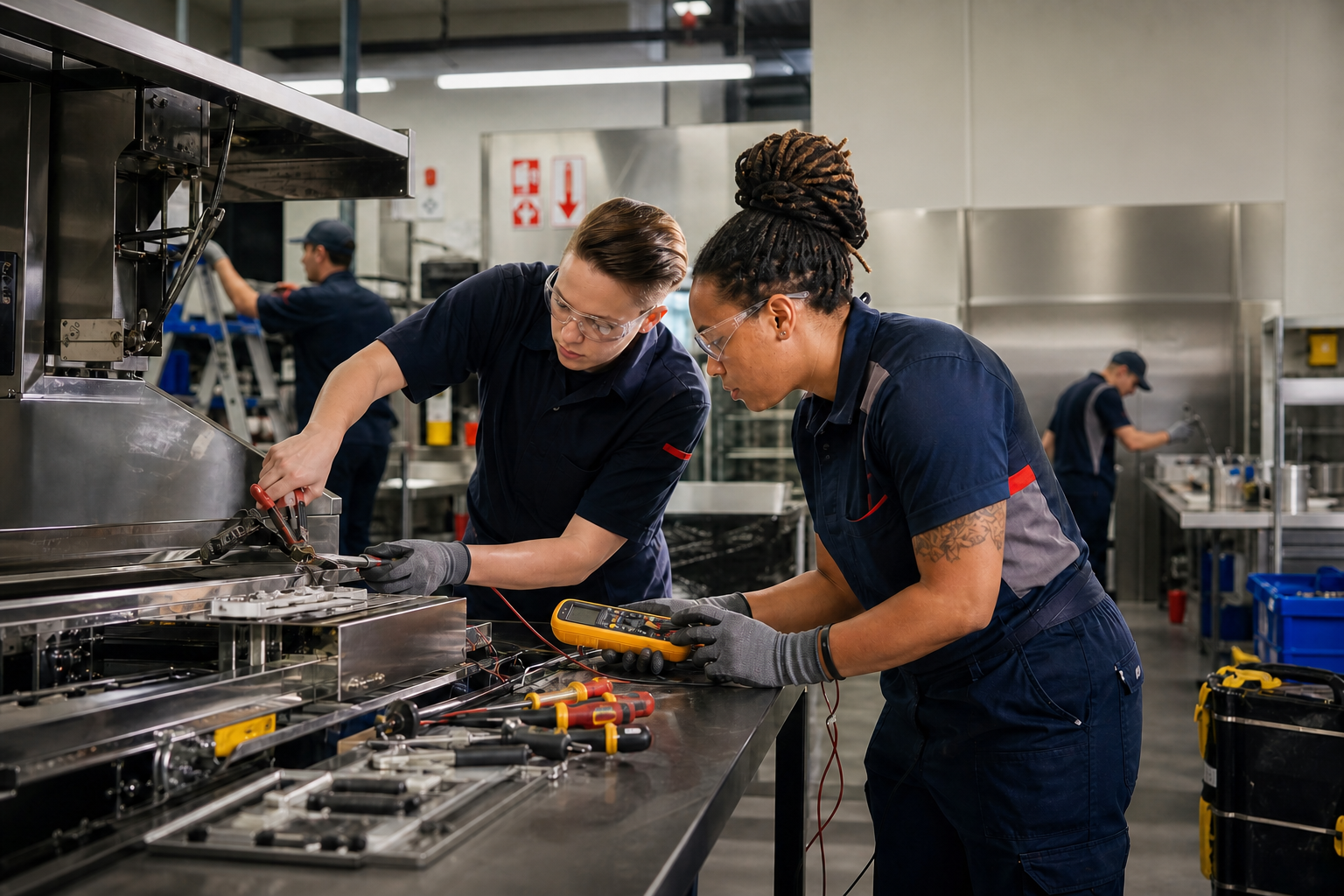
Most facilities managers assume that once a technician arrives on-site, the experience will be roughly the same no matter who sent them. That assumption is worth questioning. The real variable isn't the name on the invoice but whether the person doing the work is a direct employee of the service company or a subcontractor pulled in from a third-party network. That distinction, the difference between self-performing technicians and subcontracted crews, shapes how consistently work gets done, how clearly problems get communicated, and who actually stands behind the results across a portfolio of locations.
Key Takeaways
- Employee or subcontractor is the real variable: The person doing the work either answers directly to the company you hired or to a separate vendor network with its own standards.
- Chain of accountability drives outcomes: One employer means one party owns training, communication, and the fix when something goes wrong.
- Consistency has a measurable cost: Inconsistent service across locations shows up as repeat visits, downtime, and uneven brand experience, and the industry data on provider performance backs that up.
- A standardized technician model supports preventative maintenance: Fewer parties between the request and the repair mean fewer missed or delayed service visits.
- Evaluate the technician model before price: Training standardization, communication practices, and reporting say more about long-term service quality than the initial rate.
What Are Self-Performing Technicians?
Self-performing technicians are employees of the service company itself, not independent subcontractors. Every technician follows one set of training standards, safety protocols, and service processes set directly by their employer, instead of practices that shift depending on which outside company took the call.
This differs from the subcontractor model, where a provider takes the service request and dispatches an outside company or independent contractor to complete the work. The company you signed a contract with is often not the one showing up. Training, equipment, and accountability trace back to a different business entirely.
How Are Self-Performing Technicians Different From Subcontractors?
The core difference is the chain of accountability. A directly employed technician answers to one employer, the same company you contracted with. A subcontractor answers to a network of vendors, each with its own standards, schedules, and priorities.
In commercial facility maintenance contracts, that difference shows up in three concrete ways:
- Training consistency: Direct-employment teams train under one program, so every technician follows the same diagnostic process and documentation standard. Subcontractor training varies by company and sits largely outside the primary provider's control.
- Communication chain: With a direct employee, a facilities manager has one point of contact for updates and follow-up. With a subcontractor, requests often pass through the primary provider, then the subcontracted company, then the technician, and back again.
- Ownership of the outcome: When something goes wrong on a self-performed job, one employer owns the fix. When something goes wrong on a subcontracted job, responsibility can get passed around between the provider and the vendor before anyone resolves it.
Why Do Self-Performing Technicians Deliver More Consistent Service?
Consistency comes from standardized training and direct employment, which removes the variability that third-party subcontractors introduce when they take on the work. When every technician trains under the same program and reports to the same employer, technician accountability stays constant no matter which site they service.
That gap between top and bottom performers is not small: in the electrical trade, ServiceChannel's Facilities Spend Index found the top quartile of providers costs 37% less than the bottom quartile and arrives on-site more than four days sooner.
Retail Chains
Inconsistent subcontracted service across locations means one store gets a thorough repair while another gets a quick patch from a different vendor entirely. A self-performing model standardizes workmanship across every location, reducing repeat visits and keeping the customer experience consistent from one storefront to the next.
That standardization has real dollar value: ServiceChannel's 2025 Retail Facilities Benchmark Report found that top retailers cut facilities spend by an average of 22% simply by tightening their provider strategy.
Restaurants and QSR
Equipment downtime hits revenue and guest experience immediately. A broken piece of kitchen equipment during a lunch rush cannot wait for a subcontractor's schedule to line up. Self-performing technicians resolve issues faster because they are accountable and don’t need to involve a third party before starting work.
A 2026 MachineQ survey of QSR and fast casual operators found that nearly half had experienced downtime from equipment failure or unplanned maintenance, and almost a quarter estimated revenue losses of $1,001 to $5,000 for every hour of disruption.
Grocery and Distribution
Coordinating service across dozens of sites is harder with a patchwork of subcontractors, each with different availability and reporting habits. A single accountable team simplifies scheduling and reporting for multi-location facility management, which makes preventative maintenance easier to execute on schedule instead of falling through the cracks.
The strain is already visible at scale: Facilities News reported that grocery chains opening dozens of new locations in unfamiliar markets often arrive with limited vendor relationships already in place, which is exactly the kind of gap a single accountable technician network is built to close.
5 Benefits of Self-Performing Technicians
The advantages of this model show up in day-to-day operations, not in a sales deck.
- Consistent workmanship across every location: Same training, same standards, every site.
- Greater accountability and quality control: One employer owns the outcome, start to finish.
- Faster communication and service coordination: Fewer parties stand between the facilities manager and the person doing the work.
- More reliable preventative maintenance execution: Standardized processes reduce missed or inconsistent service visits, protecting preventative maintenance schedules.
- Improved customer experience and operational consistency: Fewer surprises and more predictable outcomes across a portfolio of sites.
What Should Facilities Managers Look For When Choosing a Commercial Service Partner?
Facilities managers should evaluate a provider's technician model, training standardization, and reporting practices before comparing price. A lower rate from a commercial service partner that relies on subcontractors can cost more in repeat visits and inconsistent results.
Before signing a contract, ask:
- Are technicians employees or subcontractors?
- How is technician training standardized?
- What quality control processes are in place?
- How are service requests communicated and tracked?
- What are typical emergency response times?
- Can the provider support multiple locations?
- How is service consistency measured?
- Are preventative maintenance programs available?
Why T&J's Self-Performing Model Meets the Standard
Once you have these criteria, the answer becomes clearer. T&J Companies operates with 100% self-performing Service Technicians across nine Northeastern states, so every job follows the same training, the same standards, and the same accountability, no matter which location needs service. Decades of hands-on commercial experience and rapid response capabilities mean facilities managers get a commercial service partner built for multi-site operations, not a network of subcontractors with varying standards.
That is what self-performing technicians deliver: one team, one standard, and one point of accountability for every site.
Contact Our Team to talk through what consistent, self-performing service could look like across your locations.
Frequently Asked Questions
What are self-performing technicians?
Self-performing technicians are employees of a service company, not independent subcontractors. They train under one program, follow one set of standards, and report to a single employer, which gives facilities managers a consistent point of contact and a clear line of accountability for every service call.
What is the difference between self-performing technicians and subcontractors?
Self-performing technicians work directly for the company you hire. Subcontractors work for an outside vendor the provider brings in to complete the job. Subcontractor training, equipment, and accountability trace back to a different company than the one on your contract.
Why do self-performing technicians provide better service?
Self-performing technicians train under one standardized program, which removes the variability that comes from passing work to different third-party vendors. That consistency shows up as fewer repeat visits, faster communication, and more predictable results across every site in a portfolio.
How do self-performing technicians improve accountability?
Because self-performing technicians answer to one employer, that employer owns the outcome from start to finish. No subcontractor network passes responsibility along, so facilities managers have a direct, traceable line back to the company responsible for the work.
What should facilities managers look for in a commercial service partner?
Facilities managers should confirm whether technicians are employees or subcontractors, how training is standardized, and how service requests are tracked and reported. Emergency response times and multi-location support also matter, since these factors predict service reliability more than price alone.
Why is service consistency important for multi-location businesses?
Multi-location businesses depend on every site delivering the same brand experience. Inconsistent service leads to repeat visits, uneven maintenance quality, and unpredictable downtime. Standardized, self-performing service keeps outcomes consistent across every location instead of varying by whichever vendor shows up.